God Takes Us into Troubled Waters to Cleanse Us
Life has a way of steering us into unexpected storms. A sudden job loss, a broken relationship, a health scare, or a venture that fails spectacularly — these moments feel like drowning. Yet many spiritual traditions and personal development thinkers suggest a different perspective: sometimes the troubled waters are not meant to destroy us, but to wash away what no longer serves us. This idea — that God or the universe uses hardship to cleanse rather than to drown — offers a profound reframe for navigating adversity.
The metaphor is simple. Turbulent water scours, purifies, and strips away sediment. In the same way, difficult experiences can strip away pride, false security, unhealthy attachments, or outdated habits. The challenge is real, but the outcome is not death — it is renewal. For adults in their twenties through fifties, who are often juggling careers, families, creative projects, or business responsibilities, this concept can be a lifeline when the current feels overwhelming.
Why This Concept Matters Across Different Lives
No two people face the same troubled waters, but the underlying need for meaning in suffering is universal. A recent college graduate struggling to find work may interpret rejection as a sign of inadequacy. A mid-career professional facing a corporate restructuring might see it as a dead end. A creative entrepreneur whose product launch flopped may wonder if they should give up entirely. In all these cases, the idea that the water is cleansing rather than drowning shifts the focus from despair to growth.
For beginners in spiritual or personal development work, this concept offers an accessible entry point. It does not require complex theology — just a willingness to consider that pain has a purpose. Experienced individuals who have weathered multiple storms may find deeper layers: they can look back and see how past hardships cleared the way for something better, reinforcing trust in the process. Professionals like therapists, coaches, or educators can use this framework to help clients or students reframe their struggles.
Entrepreneurs and business owners often encounter troubled waters in the form of cash flow crises, market shifts, or team conflicts. Here, the cleansing might mean letting go of a rigid business model or an unproductive partnership. A failed launch can force a founder to refine their value proposition, ultimately making the company stronger. The concept of being cleansed rather than drowned gives them permission to fail forward.
Creators — writers, designers, musicians, artists — face creative block, harsh feedback, or projects that stall. Those moments feel like the creative well has dried up. But they can also be a purge of clichés and borrowed ideas, leaving space for authentic expression. An artist who receives tough criticism may initially feel crushed, then later realize the critique stripped away their ego and allowed real growth.
Educators who pour energy into students may experience burnout or disillusionment when their methods stop working. The troubled water of a disengaged classroom can cleanse outdated teaching strategies, pushing them toward more dynamic, student-centered approaches. Freelancers and marketers often ride waves of feast or famine; a dry spell might cleanse the habit of chasing low-value clients, freeing them to focus on work that pays better and aligns with their values.
Different Priorities for Different People
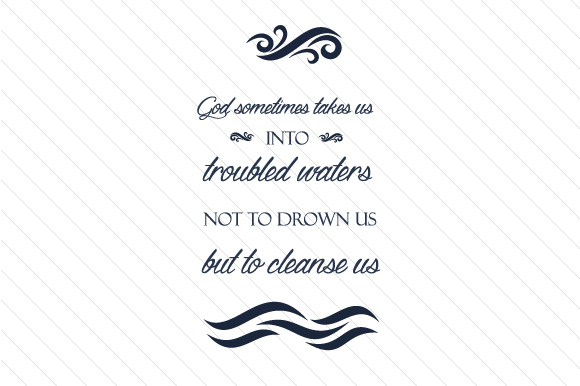
How someone evaluates this concept depends on their current priorities. Some care most about ease of use — they want a simple, comforting idea they can apply immediately when stress hits. For them, the phrase “not to drown us but to cleanse us” becomes a mental anchor. Others weigh emotional cost: the concept asks them to trust a process that feels painful, which is not always easy. Yet those who embrace it often find the long-term payoff exceeds the temporary discomfort.
Quality of insight matters to readers who want depth. They appreciate that the metaphor does not sugarcoat suffering — it validates the difficulty while offering a purposeful end. Flexibility is key for those who apply the idea across different areas of life: work, relationships, health, creativity. A single frame that works for both a career crisis and a personal loss is valuable. Long-term usefulness makes the concept stick — it is not a quick fix but a paradigm shift that grows with repeated use.
Practical Examples in Action
- A blogger whose readership plateaued for months felt like her voice was drowning in the noise. She used the time to audit her content, removing shallow posts and focusing on deeper, more personal pieces. The plateau cleansed her of the need to chase trends. Her audience eventually grew, but more importantly, she found her authentic voice.
- A small business owner faced a lawsuit that threatened his company. Legal fees and stress nearly shut him down. But the process forced him to overhaul his contracts, improve communication with clients, and build a more ethical operation. The troubled water washed away shortcuts he had taken in the early days.
- A freelance graphic designer lost a major recurring client. Panic set in. Rather than scrambling for any replacement, she used the gap to upskill in motion graphics. Six months later, she landed higher-paying projects that required the new skill. The loss cleansed her comfort zone.
- An educator struggling with student apathy tried a radical shift: project-based learning. The first semester was chaotic — troubled waters. But by the end, students were more engaged, and the teacher felt renewed. The failure of old methods cleansed the way for a better classroom culture.
Is This Concept Right for You?
Not every hardship is a cleansing, and not every troubled water has a silver lining. But for those open to the possibility, this perspective can transform how you endure difficulty. Ask yourself: Are you currently in a situation that feels like drowning? Are you willing to consider that some part of the experience might be washing away something old? That could be an outdated belief, a toxic relationship, a flawed strategy, or a version of yourself that no longer fits.
If you are new to this way of thinking, start small. When a minor frustration arises — a delayed project, a cancelled plan — pause and ask, “What might this be cleansing from me?” Over time, you build a habit that serves you in bigger storms. If you are experienced, reflect on past troubles and identify what they removed from your life. Did a breakup clear space for a healthier relationship? Did a job loss redirect your career path? The evidence often accumulates.
For professionals and creators, this concept can become part of your resilience toolkit. When a client rejects a proposal or a creative work gets panned, you can depersonalize the criticism and ask what it cleanses — pride, need for approval, attachment to one approach. Business owners can use it to frame setbacks as pivots. Instead of panicking over a revenue drop, consider: what expenses, practices, or customers need to be washed away to make room for better ones?
Consumers and hobbyists may not face high-stakes trials, but the concept applies to personal projects. A gardener whose plants die from overwatering learns restraint. A home cook whose cake collapses learns the importance of precise measurements. Troubled waters in small doses still cleanse and teach.
What This Concept Is Not
It is not a call to endure abuse or passively accept harm. Cleansing water does not excuse toxic behavior or systemic injustice. The metaphor is about internal purification and growth, not about staying in dangerous situations. Use discernment: some troubled waters are not meant for cleansing but for exiting. The key is to distinguish between a trial that refines and one that destroys. This perspective helps you find meaning in unavoidable pain, but it never justifies causing pain to yourself or others.
Similarly, the concept is not a guarantee that every hardship will lead to a happy ending. Sometimes the cleansing reveals that something is truly over — a career, a relationship, a dream. That honesty is itself a form of purification. It clears the way for mourning, then for new beginnings. The water does not promise the shore you expected, but it does promise a cleaner slate.
Making the Concept Work for You
To use this idea practically, start with three steps. First, name the troubled water. Be honest about what is hard: financial strain, rejection, confusion, loss. Do not spiritualize it away. Second, look for what is being stripped. Is it ego? Comfort? A false sense of control? A habit that held you back? Third, ask what you want to grow in that space. Cleansing creates room. What do you want to plant? Patience, humility, new skills, deeper relationships, clearer purpose?
Different readers will take different actions. A marketer might replace a failed campaign strategy with one grounded in genuine value. An educator might replace lecture-based teaching with interactive discussion. An entrepreneur might replace a product that no longer serves customers with a pivot that does. The cleansing is not passive — it invites active rebuilding.
Over time, this perspective builds resilience. You stop seeing every setback as a sign to quit and start seeing it as a sign to purify. The troubled waters become less terrifying. You learn to swim, not because the water is calm, but because you trust the current is carrying you toward cleaner shores.
Whether you are a beginner seeking comfort, a professional looking for a framework to share with others, or a creator wanting to reframe creative struggle, the idea that God sometimes takes us into troubled waters not to drown us but to cleanse us offers a steady anchor. It does not remove the pain, but it changes its meaning. And in that new meaning, you may find the strength to keep moving forward.