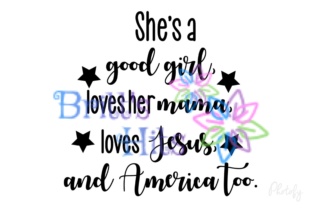
She’s a Good Girl: Loves Her Mama and Jesus
You have likely seen the phrase “She’s a Good Girl Loves Her Mama Loves Jesus” on a t-shirt, a social media caption, or a piece of home decor. At first glance, it reads like a simple declaration. But this compact statement actually carries a layered meaning that resonates with people from many walks of life. It celebrates a woman who is grounded in strong family ties and sincere faith, and its appeal goes well beyond any single demographic. Whether you are a parent looking for a positive message for your children, a content creator seeking authentic themes, or someone exploring your own values, this phrase can hold surprising relevance. Let’s walk through what it really means, why it matters, and how different people might put it to use.
What the Phrase Actually Represents
At its core, “She’s a Good Girl Loves Her Mama Loves Jesus” paints a picture of a woman whose identity is anchored in two bedrock relationships: her mother and her faith. The phrase is not judgmental or prescriptive. Instead, it affirms character traits like loyalty, respect, humility, and devotion. It does not demand perfection; it simply reflects a set of priorities that many find admirable. For some, it is a personal mantra. For others, it is a way to describe a role model or a loved one.
The emotional weight of the phrase comes from its simplicity. It strips away complexity and gets to what matters most: a life built on love for family and a higher power. That clarity is exactly why the phrase has traveled from church groups to pop culture merchandise, and from suburban living rooms to online marketplaces.
For People of Faith
If you are a person of Christian faith, the phrase may feel like a warm recognition of your daily life. It publicly validates a lifestyle that prioritizes scripture, prayer, and community. You might see it as a gentle evangelism tool—a way to start conversations about what you value without being pushy. Many church groups and women’s ministries have used this exact wording as a theme for retreats or small group discussions. It reinforces the idea that faith is not just for Sunday but woven into everyday identity.
For Families and Parents
Parents raising daughters often look for positive cultural signals that reinforce the lessons they teach at home. This phrase offers a shorthand for ideals like honoring parents and maintaining moral integrity. A mother might buy a mug or a tote bag with the saying as a quiet reminder for her daughter to stay grounded. Fathers have also used it as a compliment when speaking about their children’s character. In a media environment where teenage stereotypes often lean toward rebellion, this phrase flips the script and normalizes respect and devotion.
For Content Creators and Marketers
If you create content—whether you run a blog, an Instagram page, or a small Etsy shop—you recognize the power of a clear, relatable message. This phrase is highly adaptable. It works on apparel, wall art, greeting cards, and even digital templates. Because it appeals to an audience that values tradition and authenticity, you can design around it without alienating people. A Christian influencer might use it as a bio caption. A craft entrepreneur can print it on journal covers for a Bible study audience. The key is that the phrase already carries emotional resonance, so you can build products and content around it rather than inventing a message from scratch.
For Educators and Community Leaders
Teachers and youth group leaders sometimes look for language that bridges generational gaps. This phrase can serve as a discussion starter about respect, family, and personal values. In a classroom setting, it might be used to explore how identity statements shape self-perception. In a community program, it can be part of a workshop on building character. The strength here is that the phrase is non-confrontational and widely understood. It gives people common ground without requiring deep theological knowledge.
How Different Users Evaluate the Phrase
Your goals will determine what you look for when you encounter or consider using this message. Let’s break down the priorities based on user type.
Ease of Communication
For a beginner—someone who is new to expressing their faith or family values publicly—the phrase is almost ready-made. You do not need to explain it at length. A simple post or a T-shirt says enough. The priority here is clarity and low barrier to entry. You do not have to craft your own wording, because this phrase already does the work.
Authenticity and Relatability
If you are a person who lives out these values every day, you will likely test the phrase for authenticity. Does it feel true to your experience? Does it oversimplify? Many find that it does not claim to capture every nuance of a life of faith, but it captures a genuine core. For professionals like counselors or ministers, the phrase can be a useful reference point in conversations about identity formation.
Commercial and Creative Flexibility
For small business owners and creators, the priority often shifts to how well the phrase adapts to different formats. Can it be embroidered? Does it look good in different fonts? Does it appeal to a niche that is willing to purchase? The answer is yes, because the target audience—often women aged 20 to 50 who value family and faith—is a robust market. Many Etsy sellers have successfully built product lines around similar affirmations. The phrase also leaves room for visual customization. You can pair it with floral designs, cross motifs, or minimalist text layouts.
Long-Term Usefulness
Another consideration is whether the phrase feels timeless or trendy. “She’s a Good Girl Loves Her Mama Loves Jesus” leans more toward timeless. The values it references have been honored across generations. It is not tied to a specific year or viral moment, so it can sustain a product line or a personal brand for years. That makes it attractive for businesses that want to build a consistent catalog rather than chase fads.
Practical Examples for Different Reader Types
- A young professional in her twenties. She uses the phrase as her Instagram bio background. It instantly communicates to new followers what she stands for. She does not over-explain, and she finds that it attracts like-minded friends and professional connections who share her values.
- A mother of two teenagers. She buys a framed print with the phrase for her daughter’s room. It becomes a quiet daily reminder, and the daughter later admits it helped her make decisions during peer pressure situations.
- A blogger focusing on Christian lifestyle content. She writes a series of posts unpacking each part of the statement. The blog series gains traction because readers feel seen. She then turns the series into a downloadable ebook and a set of printable wallpapers.
- A small business owner selling hand-stamped jewelry. She offers a simple silver cuff with the word “Good Girl” and a tiny cross. Customers ask for the full phrase, so she adds an engraved version. The item becomes one of her top sellers, especially around Mother’s Day and graduation season.
- A youth group leader. She prints the phrase on bracelets for a summer camp. Each afternoon, the group discusses what “loves her mama” and “loves Jesus” means in action. The bracelets spark conversations that carry beyond the camp.
Identifying Whether This Phrase Fits Your Own Goals
Not every message is for every person, and that is completely fine. This particular phrase will resonate most if you or your audience place a high value on faith and family cohesion. Ask yourself a few questions:
- Do I want to express a personal identity that centers on respect and devotion?
- Is my target audience receptive to faith-centered language, or do they prefer universal secular values?
- Am I looking for something that works in both digital and physical spaces (social media, products, events)?
- Does the phrase align with the tone of my brand or community—casual, sincere, traditional, or modern?
If you answered yes to most of these, then this message is likely a strong match. It gives you a clear, compact way to connect with people who share your priorities. If your audience is largely skeptical of faith-based language, you might lean into the family aspect alone and let the faith element remain implicit. The phrase is flexible enough to let you emphasize different parts depending on your context.
Reliability and Respect in Using the Message
One of the reasons this phrase works well for a wide audience is that it respects the complexity of real life. It does not claim that being a “good girl” means being perfect or passive. Instead, it frames goodness as active love: love for a mother and love for Jesus. That is a strong foundation. When you use or share this phrase, you are aligning with values that many people take seriously. That builds trust with your audience, whether you are a blogger, a business owner, or a friend posting a supportive comment.
Furthermore, the phrase holds up to the kind of scrutiny that comes with long-term use. It does not rely on inside jokes or fleeting internet culture. It stands on its own, which means it is less likely to become dated or misunderstood as trends shift. For anyone investing in content, products, or personal branding, that reliability is a major advantage.
Bringing It All Together
“She’s a Good Girl Loves Her Mama Loves Jesus” is more than a catchy string of words. It is a cultural shorthand for a life built on love, faith, and family. Different people will engage with it for different reasons—some as a personal affirmation, others as a creative asset, and still others as a teaching tool. What matters is that it serves multiple purposes without losing its core meaning. Whether you are just discovering the phrase or considering it for a new project, take a moment to consider how it fits your own journey. Chances are, it will find a natural place in your world.