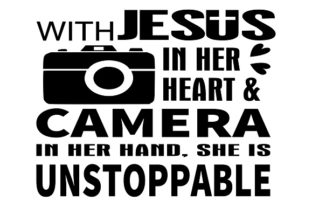
With Jesus in Her Heart a Camera in Her Hand She is Unstoppable: Evaluating a Faith-Driven Approach to Photography
The phrase With Jesus in her heart a camera in her hand she is unstoppable captures a specific vision of creative purpose. It describes a person whose Christian faith and passion for photography are not separate interests but integrated forces that shape how she works, what she captures, and why she creates. For those evaluating whether this mindset aligns with their own creative goals, understanding what this phrase actually means in practice—and what it does not mean—is essential before adopting it as a guiding principle.
What Does This Phrase Mean in Practice?
At its core, With Jesus in her heart a camera in her hand she is unstoppable describes a photographer who draws confidence, direction, and resilience from her Christian faith. The "unstoppable" quality refers not to perfection or invincibility but to persistence rooted in spiritual conviction. This approach often involves viewing photography as a form of service, storytelling, or worship rather than primarily as self-expression or career advancement.
Someone who embodies this phrase typically approaches her work with an emphasis on compassion, ethical storytelling, and a sense of calling. She may prioritize subjects that reflect dignity, hope, or redemption, and she often considers her audience not just as viewers but as people she is called to serve or inspire. The camera becomes a tool for connection, and the faith provides the emotional and spiritual grounding to handle the challenges of creative work.
Why People Are Interested in This Approach
Interest in With Jesus in her heart a camera in her hand she is unstoppable often arises from a desire to integrate faith and craft more intentionally. Many photographers, both amateur and professional, feel a disconnect between their artistic ambitions and their spiritual values. This phrase offers a framework where those two worlds are unified rather than competing.
Other common reasons people explore this mindset include:
- Seeking purpose beyond metrics: When photography feels reduced to likes, shares, or sales, this approach reframes success in relational or spiritual terms.
- Navigating creative burnout: Faith-based resilience can provide emotional resources that technical skills alone cannot sustain.
- Desiring ethical clarity: A faith-informed perspective often includes clear boundaries about what to photograph, how to treat subjects, and how to handle difficult content.
- Finding community: This phrase sometimes represents belonging to a network of like-minded creators who share similar values.
Benefits and Strengths of This Mindset
For photographers who resonate with the idea behind With Jesus in her heart a camera in her hand she is unstoppable, several practical benefits emerge:
Sustained Motivation
When the primary motivation for photography is rooted in faith rather than external validation, the photographer is less vulnerable to discouragement from low engagement, critical feedback, or slow career growth. The work retains meaning even when visible results are absent.
Clear Ethical Framework
Faith-based values often provide unambiguous guidance on issues like consent, manipulation of images, portrayal of vulnerable subjects, and honest representation. This can simplify decision-making in ambiguous situations.
Emotional Resilience
Creative work involves rejection, comparison, and self-doubt. A spiritual foundation can offer a stable source of identity that does not rise or fall with creative success. This allows the photographer to take risks and persist through setbacks.
Deeper Connection with Subjects
Photographers who operate from a faith perspective often report stronger rapport with their subjects because they approach each interaction with genuine care and a sense of stewardship rather than extraction.
Tradeoffs and Considerations
While the phrase With Jesus in her heart a camera in her hand she is unstoppable is inspiring to many, it also involves tradeoffs that deserve honest consideration:
Potential for Narrowing Creative Scope
A faith-driven approach may limit the types of projects a photographer pursues. Work that conflicts with personal convictions—such as assignments involving explicit content, certain commercial messages, or themes that feel spiritually misaligned—may be declined. This can affect income, portfolio diversity, and professional opportunities.
Risk of Spiritualized Pressure
When photography is seen as a calling, failure can feel like spiritual failure, not just creative disappointment. This can add weight to every shoot and lead to guilt or self-criticism when results fall short.
Audience Expectations
Photographers who openly embrace this mindset may attract an audience with specific expectations about content and messaging. Balancing artistic freedom with audience expectations can be challenging, especially if the photographer's personal style evolves.
Integration vs. Compartmentalization
Some photographers prefer to keep their faith private and their photography professional. For them, the integrated model represented by With Jesus in her heart a camera in her hand she is unstoppable may feel uncomfortable or inauthentic if it does not match their personality or context.
Situations Where This Approach Is a Strong Fit
The mindset behind With Jesus in her heart a camera in her hand she is unstoppable tends to work well in the following scenarios:
- Faith-based organizations: Photographers working for churches, ministries, or nonprofits with a Christian mission will find this framework directly applicable.
- Documentary and humanitarian work: Projects focused on dignity, justice, or compassion align naturally with values rooted in service and love for others.
- Family and community photography: Those who photograph weddings, families, or community events often benefit from a relational, service-oriented mindset.
- Personal creative projects: For photographers who create primarily for meaning rather than income, this approach provides grounding and direction.
- Mentoring and teaching: Photographers who train others in both craft and character may find this integrated model useful for holistic development.
Situations Where Alternatives May Be Worth Considering
There are also contexts where a different framework may serve better:
- Commercial and advertising work: High-volume commercial photography often requires flexibility with subject matter and messaging that may conflict with a faith-driven model.
- Photojournalism with strict neutrality: Some journalistic contexts require the photographer to remain detached and objective, which may clash with a faith-based, compassion-first approach.
- Fine art exploring complex themes: Artists who need to engage with ambiguity, darkness, or moral complexity may find a faith framework too constraining for certain projects.
- Early career portfolio building: New photographers who need to accept a wide range of assignments to gain experience may struggle with the selectivity that faith-based boundaries require.
- Secular or pluralistic environments: In contexts where religious language or framing could alienate clients or collaborators, a more universal ethical framework may be more appropriate.
Practical Decision-Making Insights
If you are considering whether With Jesus in her heart a camera in her hand she is unstoppable is a helpful framework for your own photography, here are practical ways to evaluate its fit:
Assess Your Core Motivations
Ask yourself: What would remain meaningful about photography if I never received public recognition or payment? If the answer relates to connection, service, or spiritual expression, this approach may resonate deeply. If the answer is primarily about artistic mastery, storytelling craft, or career achievement, a different framework may serve you better.
Test Integration in Small Ways
You do not need to adopt the entire philosophy at once. Try approaching one project with intentional faith integration—praying before shoots, choosing subjects that reflect your values, or processing your images through a spiritual lens. Observe whether this enhances or restricts your creative experience.
Consider Your Audience and Context
If your clients or viewers share your faith perspective, integration will feel natural and welcomed. If they represent diverse backgrounds, consider how much of your personal framework to communicate openly versus hold privately. Both approaches can be valid.
Evaluate Your Resilience Needs
If you frequently struggle with comparison, burnout, or discouragement in photography, a faith-driven approach may provide exactly the emotional support you need. If you already have strong internal motivation and emotional stability, the added structure may feel unnecessary.
Be Willing to Adapt
The phrase With Jesus in her heart a camera in her hand she is unstoppable is not a rigid formula. Some photographers embrace it fully for a season and then adjust as their work evolves. Treat it as a starting point, not a final destination.
Determining Alignment with Your Goals
Ultimately, the value of this approach depends on whether it helps you create more meaningful, sustainable, and authentic work. For photographers who already feel that their faith and their craft are separate, With Jesus in her heart a camera in her hand she is unstoppable offers a path toward integration that can reduce internal conflict and increase creative freedom. For photographers who do not share the faith component, the underlying principle—letting your deepest values guide your creative work—still holds wisdom that can be adapted to any worldview.
The most honest evaluation comes from trying it in practice. Read accounts from photographers who live by this phrase. Have conversations with those who have adopted it long-term. Compare their experiences with your own desires and constraints. What works for one person may not work for another, and the goal is not to fit a mold but to find a framework that makes you truly unstoppable—not because you never fail, but because you have a reason to keep going.
In the end, With Jesus in her heart a camera in her hand she is unstoppable is less about claiming invincibility and more about grounding creative work in something that does not waver when the external rewards fade. For those who share that foundation, it can be a powerful, practical, and sustainable way to approach photography. For those who do not, the same principle can be adapted to whatever core belief gives your work meaning. The key is intentionality: knowing why you create, for whom you create, and what keeps you creating when the path gets hard.