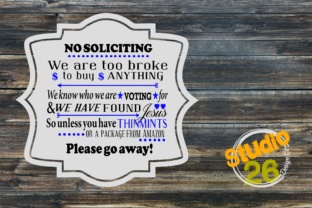
No Soliciting: Who Needs It and Why It Matters
You have likely seen the sign before. A small placard near a front door or storefront window reads "No Soliciting." It is short, direct, and widely recognized. But what does it actually mean, and why do so many people display it? More importantly, should you consider using one yourself? The answer depends on who you are, what you value, and how much unwanted interaction you are willing to tolerate.
No soliciting is a request directed at salespeople, canvassers, petition-signers, religious recruiters, and others who approach a property uninvited. It signals that the occupant does not wish to be disturbed by unscheduled pitches or promotions. While the legal weight of such signs varies by location and local ordinance, their practical effect is often clear: they draw a boundary between your private time and the public world of commerce and causes.
What No Soliciting Means in Practice
At its core, a no soliciting policy is about control. It gives you a way to decide who enters your space and when. For some people, this is about convenience. For others, it is about safety, productivity, or even peace of mind.
Solicitors typically fall into a few categories. There are door-to-door salespeople offering anything from home security systems to vacuum cleaners. There are political canvassers gathering signatures or distributing literature. There are charitable fundraisers, religious representatives, and occasionally outright scammers pretending to be any of the above. A no soliciting sign does not stop every single person, but it significantly reduces the frequency of these interruptions.
It is worth noting that no soliciting is not the same as no trespassing. The former is a polite request aimed at commercial or cause-based visitors. The latter is a legal warning with more serious implications. Understanding this distinction matters when you choose signage and set expectations for your household or business.
Who Benefits Most from No Soliciting
Different people have different reasons for caring about this topic. While almost anyone can benefit from fewer interruptions, certain groups find no soliciting especially useful.
Homeowners and Renters Seeking Peace
If you work from home, care for young children, or simply value quiet afternoons, a no soliciting sign can be a small but meaningful tool. Remote workers and freelancers often report that unexpected knocks disrupt focus. A single interruption can break a flow state and take fifteen minutes to recover from. Multiply that by several solicitors in a week, and the lost productivity adds up.
Parents with napping children also appreciate the buffer. A ringing doorbell or persistent knock can undo an hour of effort getting a child to sleep. For these households, a no soliciting sign is not about being unfriendly. It is about protecting a fragile routine.
Elderly residents or those living alone sometimes use no soliciting signs for security reasons. While most solicitors are legitimate, the knock on the door still carries an element of risk. Reducing the number of strangers approaching your home reduces opportunities for scams, theft, or uncomfortable encounters.
Small Business Owners and Entrepreneurs
Soliciting does not only happen at homes. Many small businesses deal with unscheduled visitors who want to pitch products, services, or partnerships. A bakery, a repair shop, or a creative studio can be interrupted multiple times a day by salespeople who assume the owner is available.
For small business owners, time is money. A thirty-minute conversation with a solicitor is not just an annoyance. It is lost revenue and lost focus. A clear no soliciting policy at the entrance lets customers and employees know that unscheduled sales calls are not welcome. It also sets a professional tone for how the business operates.
Some entrepreneurs go a step further and post a specific version of the sign that says "No Soliciting. Appointments Only." This clarifies that the refusal is not personal but logistical. It also reduces awkward interactions for employees who may feel pressured to listen to a pitch they do not want.
Creators and Professionals Who Value Focus
Writers, designers, developers, and other knowledge workers often need sustained concentration. A single interruption can derail complex thinking. Many creative professionals treat their workspace as a sanctuary. A no soliciting policy, whether at a home office or a rented studio, helps preserve that environment.
These individuals tend to prioritize speed and reliability in their daily workflows. They know that every interruption comes with a switching cost. A no soliciting sign is a simple, low-cost way to protect against one category of disruption. It is not a perfect solution, but it is a practical first step.
Consumers Tired of High-Pressure Tactics
Some people simply dislike the confrontational nature of door-to-door sales. They find it uncomfortable to say no in person, especially when the solicitor is persistent or emotionally manipulative. A no soliciting sign acts as a preemptive boundary. It allows the occupant to avoid the awkwardness entirely by letting the sign do the talking.
These consumers may also be concerned about privacy. Unsolicited visitors often gather information about who lives in a home, what car they drive, or what repairs they might need. For some, that level of observation feels invasive. A no soliciting sign does not eliminate data collection, but it reduces one channel of direct observation.
Evaluating Whether No Soliciting Fits Your Situation
Before putting up a sign, it helps to think about your specific goals and circumstances. No soliciting is not a one-size-fits-all solution. It works well for some people and is less relevant for others.
Ask yourself what problem you are trying to solve. Are you losing focus during work hours? Do you feel unsafe when strangers approach your door? Are you tired of cleaning up flyers left by solicitors? Or do you simply want to assert control over your personal space?
Your answers will guide how strict or flexible your policy should be. Someone who works from home and receives frequent sales calls may want a bold, professionally printed sign. Someone who lives in a low-traffic neighborhood may prefer a smaller, less conspicuous option. Both approaches are valid as long as they match the user's priorities.
Practical Considerations for Different Settings
If you decide that no soliciting makes sense for you, the next step is choosing the right approach. Signage is the most common method, but not all signs are equal.
Durability matters. A paper sign taped to a window will fade, peel, or fall off within weeks. A weather-resistant plastic or metal sign lasts for years and remains legible in rain and sun. For businesses, professional signage also signals that the policy is serious and permanent.
Placement is equally important. A sign should be visible from the approach to your door, ideally at eye level. If it is hidden behind a bush or placed too high, visitors may miss it. Some people combine a door sign with a small sticker near the doorbell or mailbox for extra visibility.
Wording can also vary. A simple "No Soliciting" is standard, but some people add context. "No Soliciting, Including Religious and Political Canvassers" leaves no ambiguity. "No Soliciting, Thank You" softens the tone while keeping the message clear. Choose wording that reflects your comfort level and local norms.
When No Soliciting Might Not Be Enough
It would be misleading to claim that a sign solves every problem. Some solicitors ignore signs entirely. Others reinterpret them creatively. A person selling magazines might argue they are not soliciting but conducting a survey. Political canvassers sometimes claim exemptions under free speech protections, depending on local laws.
If you live in an area where sign violations are common, you may need to supplement your no soliciting policy with other measures. A peephole or doorbell camera lets you see who is outside before responding. A simple "Not Interested" through a closed door is sufficient for anyone who knocks despite the sign. You do not owe anyone a conversation, even if they claim to have a special offer or cause.
Some communities have registry-based solutions where residents opt into a list of homes that do not want solicitors. These programs are managed by local law enforcement or municipal offices and carry more legal weight than a private sign. If you are serious about enforcement, check whether such a program exists in your area.
Long-Term Usefulness and Flexibility
A no soliciting policy is not permanent. You can adopt it temporarily during busy seasons, remove it when your circumstances change, or adjust its strictness over time. This flexibility makes it a low-risk decision. The cost of a sign is minimal, and the potential benefit in reduced interruptions can be significant.
For example, a freelance graphic designer might use a no soliciting sign during a major project and take it down afterward. A retiree who enjoys conversation might forego a sign entirely. A family with a new baby might post a sign for a few months and decide later whether to keep it. The sign works for you, not the other way around.
Over time, you may also notice subtle benefits beyond the obvious ones. Fewer interruptions mean less irritation. Less irritation means a calmer home or workspace. That small change in daily experience can improve your overall quality of life more than you might expect.
Matching Your Decision to Your Values
Ultimately, the decision to use no soliciting comes down to what you prioritize. If you value focus, privacy, or safety, the case is strong. If you enjoy spontaneous interactions or live in a community where door-to-door visits are part of the culture, you may feel differently.
There is no right or wrong answer. The important thing is to make an intentional choice rather than defaulting to a habit or ignoring the issue entirely. A no soliciting sign is a simple tool. Like any tool, its value depends on how well it meets your needs.
If you are curious, try it for a month. See how it changes your experience. You might find that the peace it brings is worth far more than the small effort it takes to put up a sign. And if it does not work for you, you can always take it down.